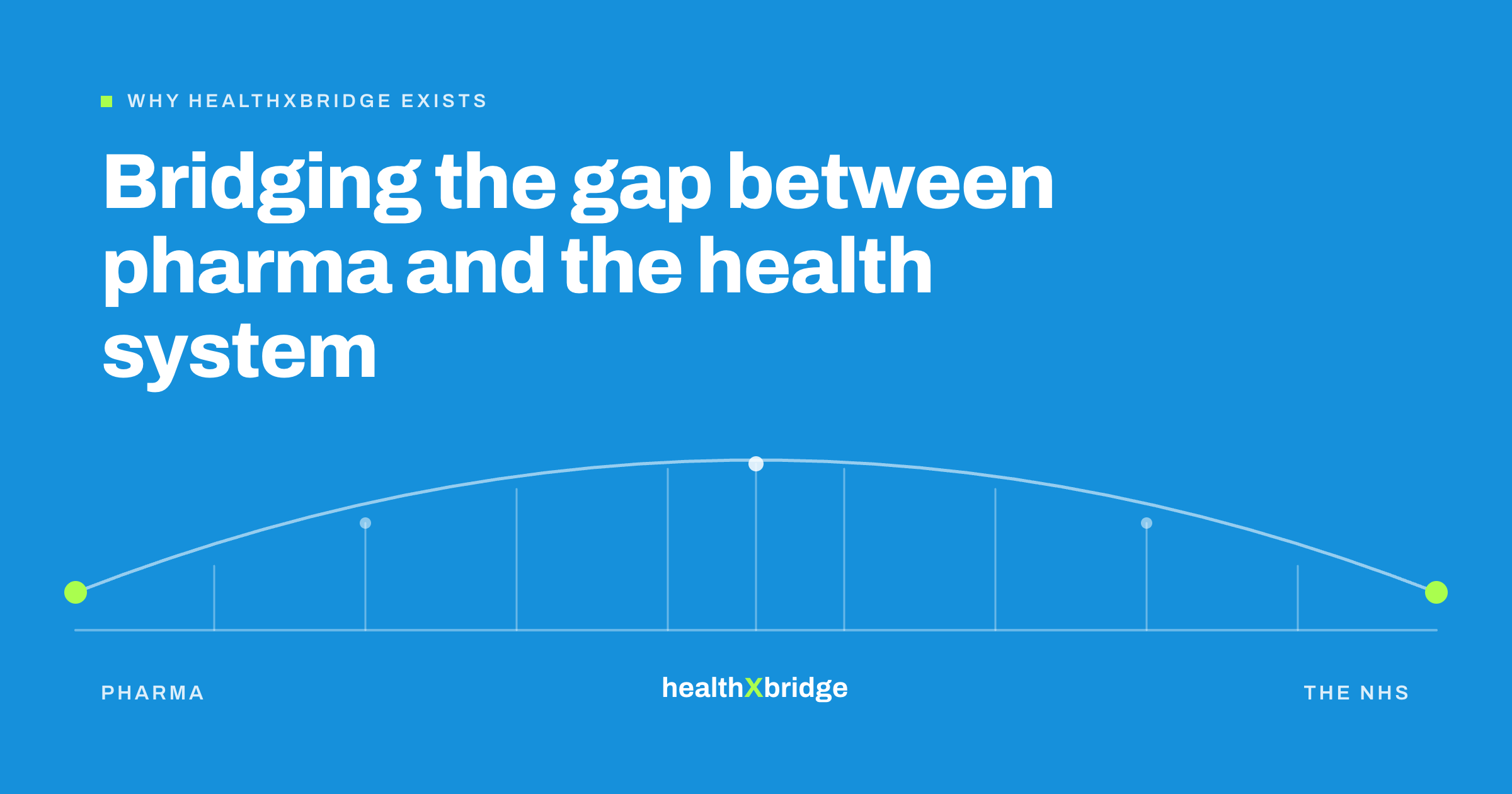

If healthcare transformation is the goal, pharma must become part of the solution, not just the supplier.
Healthcare systems are under unprecedented pressure: workforce shortages, financial constraint, rising demand, and increasing therapeutic complexity. At the same time, pharmaceutical innovation is accelerating.
The challenge is not a lack of breakthroughs; the challenge is translating innovation into operational reality.
This is where a whole-system approach becomes essential, and where healthXbridge works differently.
The structural gap holding back access
Pharmaceutical organisations are highly skilled in:
- Clinical development
- Regulatory strategy
- Market access planning
- Evidence generation
Healthcare systems, meanwhile, operate within:
- Commissioning frameworks
- Workforce capacity limits
- Pathway dependencies
- Data governance constraints
- Local financial pressures
Even when a medicine is clinically compelling, adoption can stall because:
- The care pathway isn’t configured for it
- Services lack capacity
- Funding flows aren’t aligned
- Real-world data isn’t accessible quickly enough
Bridging this gap requires more than better communication. It requires capability shift.
Our philosophy
At healthXbridge, we believe transformation happens when pharma teams understand and actively engage with the healthcare ecosystem, not as external stakeholders, but as informed partners.
Our team reflects the system itself, including former healthcare leaders, commissioners, clinical experts, and policy leaders.
Because we understand both worlds, we help pharma internal teams build the skills and confidence to work effectively within healthcare systems.
Building pharma capability to transform, not just launch
We work proactively with internal teams to develop practical, system-facing capabilities in three core areas:
1. Pathway redesign thinking
Most access challenges are pathway challenges.
We support teams to:
- Map current patient journeys
- Identify bottlenecks and inefficiencies
- Understand referral flows and diagnostic delays
- Align innovation with service capacity
When pharma understands pathway mechanics, engagement becomes collaborative rather than transactional.
2. Accelerating medicines to patients… responsibly
Speed matters, but speed without alignment creates resistance.
We equip teams to:
- Understand commissioning priorities
- Engage stakeholders early in service design
- Align value propositions to system outcomes
- Frame innovation in terms of workload reduction, prevention, and long-term savings
This allows pharma to:
- Support implementation planning
- Anticipate barriers before launch
- Contribute meaningfully to service readiness
Acceleration becomes systemic — not forced.
3. Enabling real-time insight
Healthcare transformation requires data. But data is often fragmented, retrospective and siloed across organisations.
We help teams understand:
- Where real-world evidence sits
- How to engage appropriately around data
- How to use insights to support service improvement
- How to create feedback loops that inform both system and company strategy
When pharma teams can interpret and respond to real-time system signals, engagement becomes adaptive and informed.
The shift: from external partner to embedded collaborator
The traditional dynamic between healthcare and industry can feel reactive. Launch. Negotiate. Respond to resistance.
A whole-system approach changes this dynamic.
Pharma teams who understand service pressures, budgetary realities and clinical workflow are able to:
- Design smarter engagement strategies
- Support pathway redesign conversations
- Contribute to sustainable transformation
- Build trust with system leaders
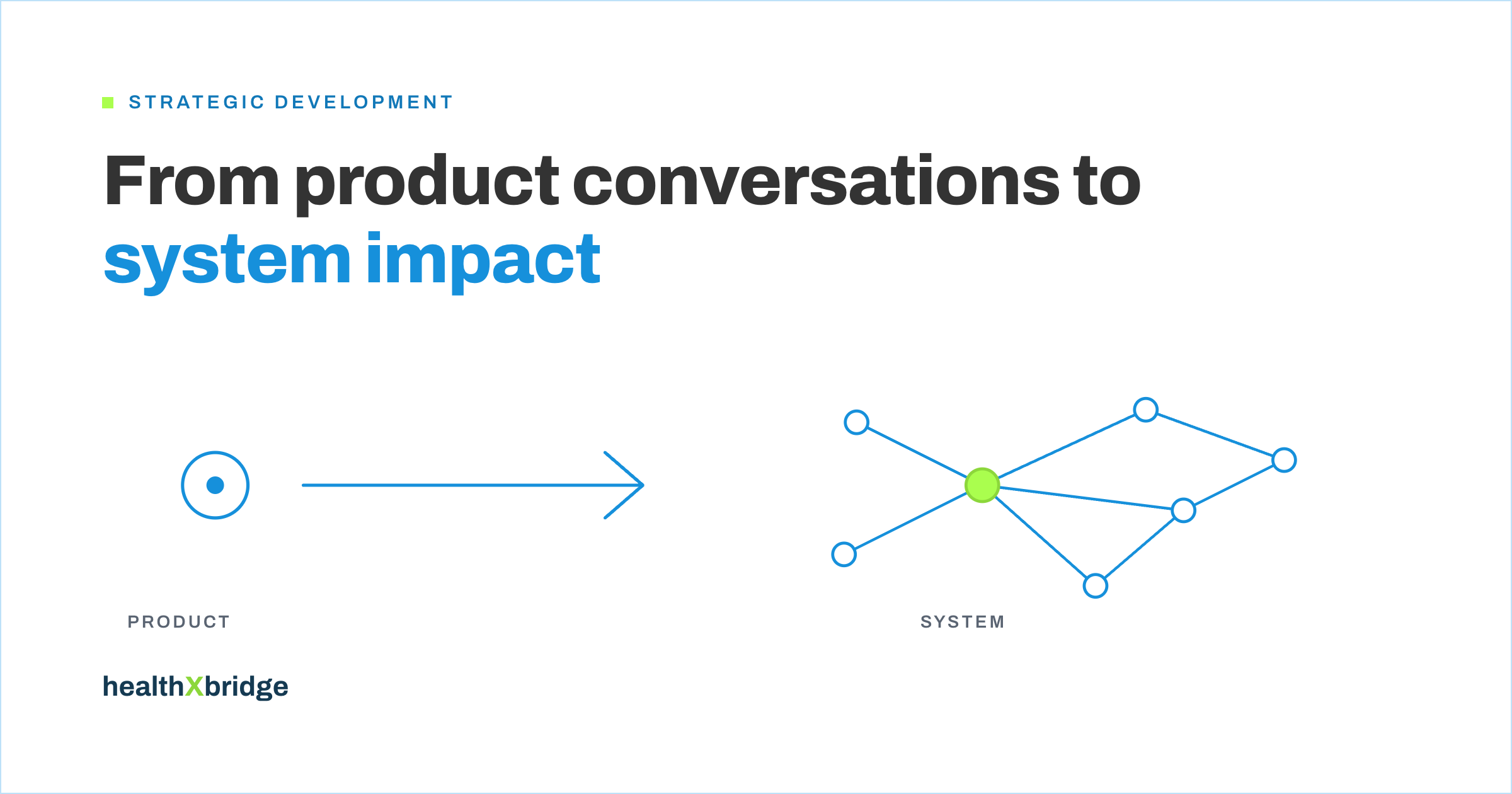
The relationship shifts from product-focused to system-focused.
Why this matters now
Healthcare systems are moving toward:
- Integrated care models
- Value-based frameworks
- Population health approaches
- Data-driven decision-making
Industry has an opportunity to evolve in parallel.
Those who build internal system capability will be best positioned to accelerate appropriate access, demonstrate long-term value and support genuine healthcare transformation. Those who do not risk being seen as disconnected from operational reality.
Our role in transformation
At healthXbridge, we do not simply design external programmes. We build internal capability within pharma organisations to:
- Think systemically
- Engage responsibly
- Contribute meaningfully
- Accelerate access sustainably
When industry and healthcare understand each other, and collaborate responsibly, patients receive effective medicines faster.
Transformation is not about pushing harder. It is about working smarter, together.